
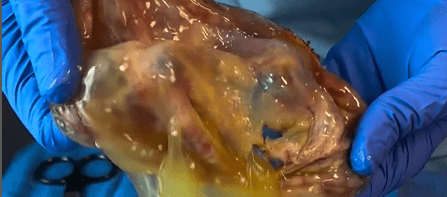
Silicone in Breast implants: Toxicity, Migration and Health Risk
45 years of hidden danger Since the 1990s, women with complaints about their breast implant have often been ridiculed, labeled hysterical or psychologically unstable. We knew what we felt. How shocking is it, then, that we discovered that a crucial aspect of . . . . . . the toxicity of a substance present in breast implants . . . . has hardly been investigated? Only as real all You can call us neurotic. But if it turns out that substances such as this form of silica, which were already known as toxic before 1980 and are linked to fibrosis and autoimmune diseases, are in implants, then not our mind, but the science of plastic surgery fails." Read more...
Amorphous pyrogenic silica : Properties, toxicity, and risks in breast implants Silicon dioxide (SiO2) exists as a natural (biogenic), crystalline and synthetic amorphous silica (SAS). Biogenic silica, such as diatom earth, is used in food, agriculture and filtration. Crystalline silica, such as quartz, is essential in construction and electronics, but is classified as Carcinogen-1. SAS, such as pyrogenic and precipitated silica, serves as a filler in rubber, polymers, cosmetics and medicines. The properties vary by type, size and treatment. Read more
Institute of Medicine: Risk derivatives were minimised Critics call the Institute of Medicine (IOM) report Safety of Silicone Breast Implants (1999) obsolete, but many still refer to this report in 2025 to defend the safety of breast implants. As a patient organisation, we thoroughly analyzed the report and found that the risk derivatives of pyrogenic amorphic silica . In fact, the IOM quoted research that showed that this silica is toxic to macrophages (immune cells), but ignored self these findings in the conclusions Read More...
Migration of silica The IOM study Safety of Silicone Breast Implants (p.68) claims that silica cannot migrate. DeGroot and Macosko, and other literature suggest that unbound pyrogenic silica particles and low-molecular siloxanes (such as cyclic/linear PDMS oligomers) may migrate from silicone breast implants, especially in aging, silicone bleed or rupture.What exactly does this mean? Aging: Over time, the PDMS matrix can degrade due to mechanical stress, exposure to body fluids, or oxidative processes, which loosen silica particles into the matrix. Read more
T-cell activation Evidence for risks of silica in silicone breast implants Institute of Medicine (IOM) from 1999 about silicone breast implants and the possible activation of T cells, white blood cells that are crucial to the immune system. Activation of T-cells by substances such as pyrogenic Although the IOM report cites studies that did not find convincing evidence for T-cell activation by silicone or silica, it trivializes crucial signals, such as the toxicity of silica to macrophages. Read more
Capsular contracture and silica An overlooked factor is pyrogenic silica, a filler that makes up 21–27% of the implant shell and enhances its strength and elasticity. Many plastic surgeons are unaware of the presence of pyrogenic silica, let alone its potential role in complications. Pyrogenic silica particles, which are not fully bound within the polydimethylsiloxane (PDMS) matrix, can migrate over time due to aging, silicone bleed, or rupture. The “bound rubber” layer — in which PDMS anchors pyrogenic silica particles through adsorption and hydrogen bonding between silica particles — may weaken as a result of oxidative or mechanical degradation. Read more
Summary: Possible risks of pyrogenic nano silica in silicone breast implants
Introduction
Silicone breast implants often contain pyrogenic amorphic nano silica, sometimes treated with trimethylsilyl groups, as filler to improve mechanical properties. Although silicone polymers have been extensively investigated, there is little attention to the long-term effects of nano silica, especially after degradation in the body. Based on available scientific literature, it is suggested that pyrogenic nano silica may cause a pro-inflammatory response, activate T-cells and potentially contribute to Breast Implant-Associated Anaplastic Large Cell Lymphoma (BIA-ALCL), a rare T-cell lymphoma, and other symptoms such as Breast Implant Illness (BII). This summary presents the main findings and stresses the need for further research.
Important findings from the literature
IARC Monograph 68 (1997) reports that crystalline silica in experimental animals caused lymphomas, originally called histiocytic lymphoma, but later classified as anaplastic large cell lymphoma (ALCL). This suggests that silica is possible T-cell malignancies can be stimulated by chronic immune stimulation.
Toxicity of pyrogenic nano silica to macrophages:
Zhang et al. (2012) suggest that pyrogenic amorphic silica (fumed silica) may be more toxic to macrophages than crystalline silica (such as Min-U-Sil), by three rings (3MRs), high concentration of isolated silanol groups, and chain-like aggregates, which may cause membrane disturbance. Pyrogenic silica appears to activate the NLRP3 inflammasome, which can lead to IL-1β secretion, erythrocyte hemolysis, and cell death. Thermal treatment may reduce toxicity by silanol reduction, while hydration may partially restore toxicity, which is relevant to implant degradation. Further study is needed to confirm these effects. (Source: Zhang, H., et al., 2012, Journal of the American Chemical Society).
Disclaimer:
The information on this website is intended for informational purposes and is based on carefully collected scientific research. The topics and hypotheses discussed have not yet been widely recognised within the medical community. We are not doctors and do not give medical or legal advice. No rights can be derived from the content of this website. Stichting SVS accepts no liability for any consequences, damage, complaints or legal proceedings arising from the use of this information.

